Engineering the Alpenflage: How the Swiss Perfected the "Wearable Backpack"
Category: Uniform History / Gear Design
Reading Time: 4 Minutes
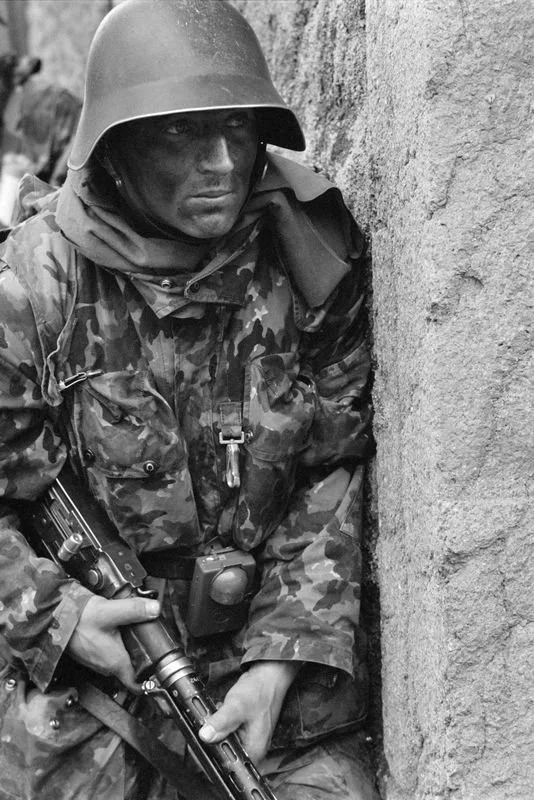
To understand the iconic Swiss Alpenflage combat suit, you have to look past the loud red camouflage pattern and look at the engineering. During the Cold War, the Swiss military adopted a radically different doctrine from NATO or the Warsaw Pact. Instead of issuing soldiers a standard uniform and a separate set of load-bearing webbing, the Swiss designed a uniform that was the webbing.
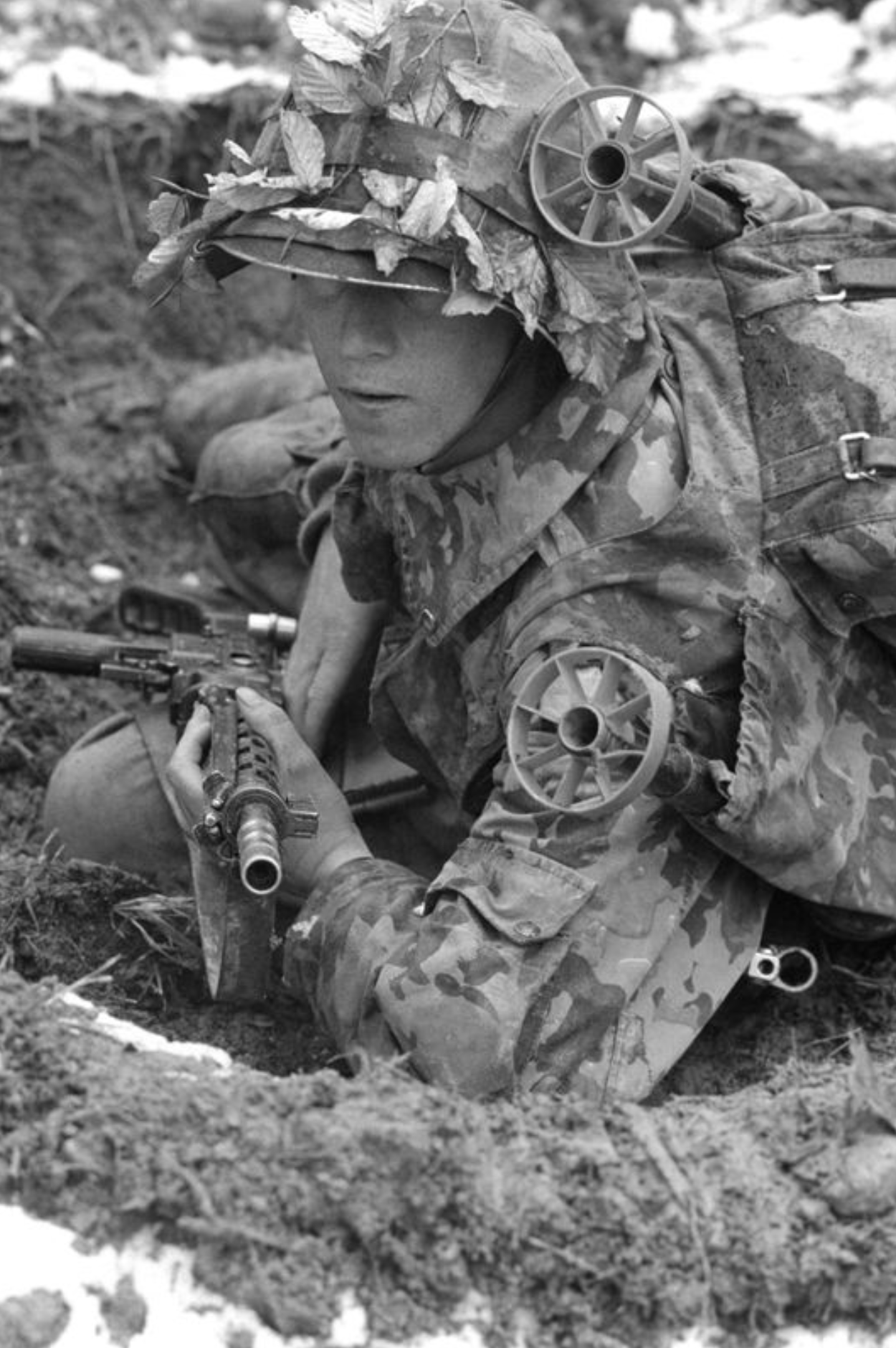
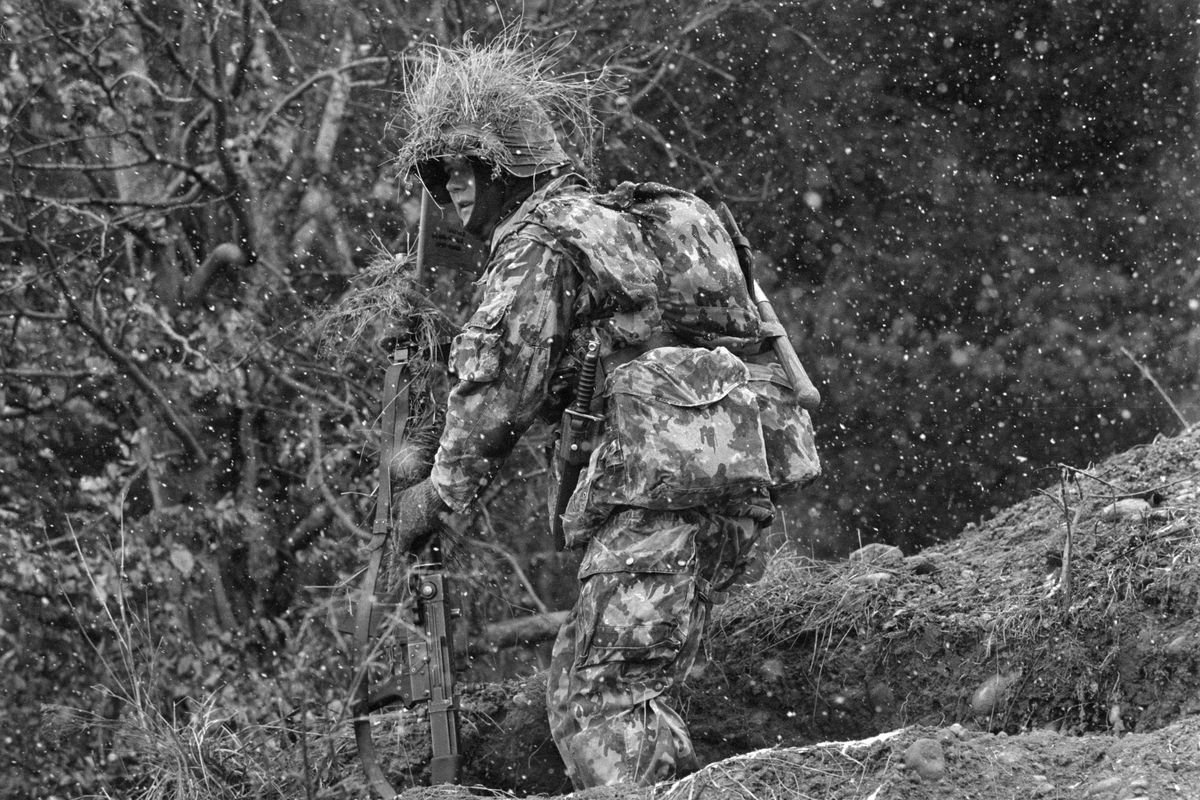
The goal was extreme self-sufficiency. The jacket and trousers were engineered to hold an infantryman’s entire fighting load: magazines, rifle grenades, rations, a mess kit, cleaning supplies, and an integrated rucksack.
Today, this entire system is often broadly labeled as the "M70" on the surplus market. However, the M70 was actually the end result of a decade of field testing and necessary redesigns. Before the M70, there was the Kampfanzug M61—an ambitious first draft that taught the Swiss military some hard lessons about weight, weather, and human ergonomics.
Here is how a decade of alpine field feedback forced the evolution of the “Vierfruchtpyjama” (Four-Fruit Pajamas).
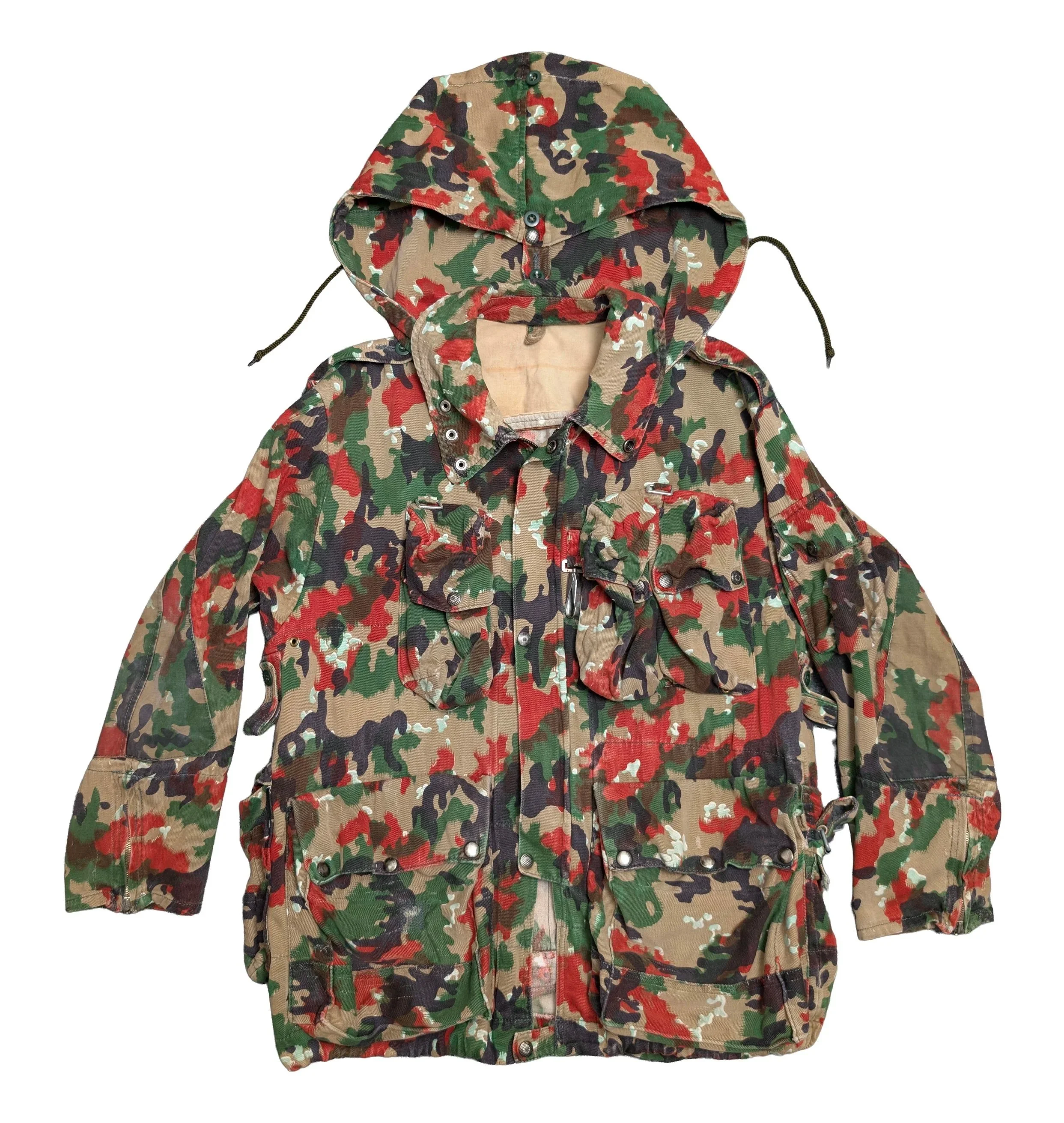
The M61:
An Ambitious (But Flawed)
First Draft
Introduced in 1961, the Kampfanzug M61 was the original heavyweight implementation of this integrated gear doctrine. It proved that a soldier could carry their entire kit inside their uniform, but it also revealed the physical toll of doing so.
The Design Flaw: Static Ergonomics
The M61 featured a bayonet frog sewn directly onto the left side of the jacket. On a tailor's dummy, this looked incredibly efficient. In the field, soldiers found that a fixed, rigid blade attached directly to their torso made sitting in vehicles, crouching, or laying prone incredibly uncomfortable.
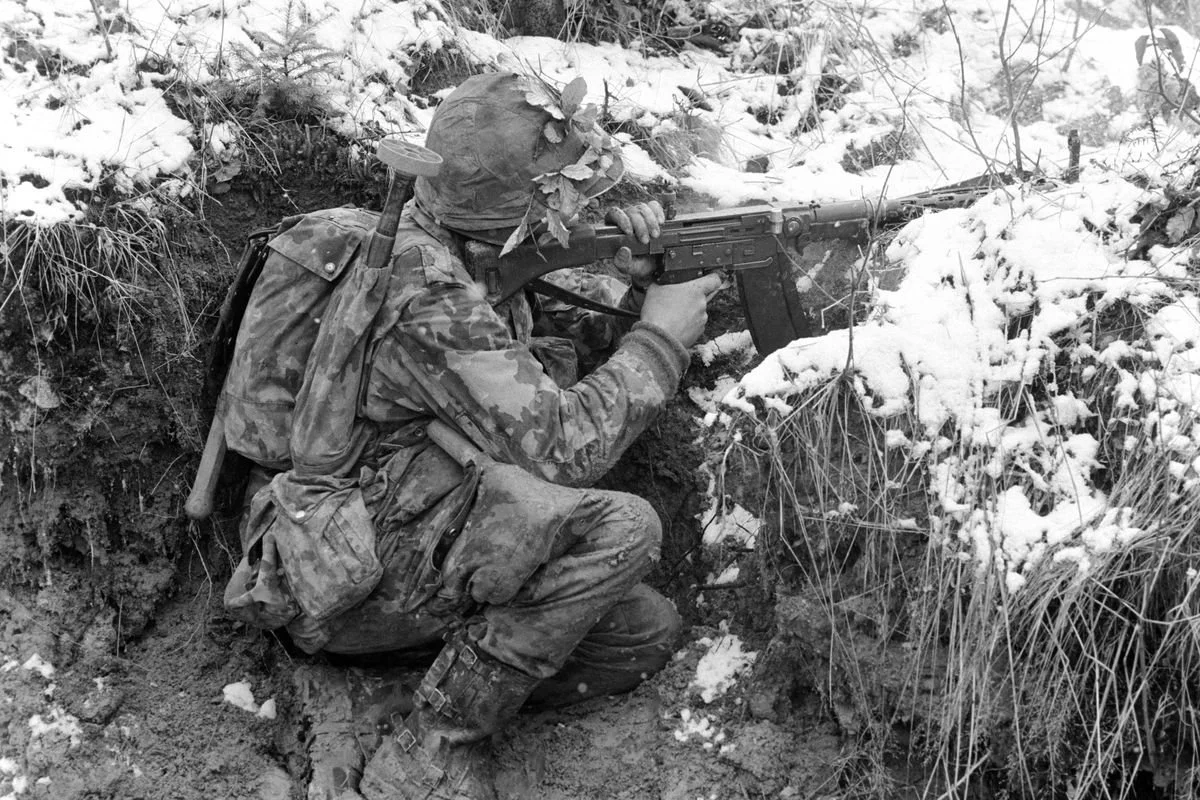
Furthermore, the M61 utilized heavy cotton canvas with standard cloth reinforcements on the elbows and knees. When soldiers went prone in the damp, snowy conditions of the Swiss Alps, that heavy canvas immediately absorbed freezing water, adding miserable weight to an already heavy garment.
Finally, the internal suspension system—the hidden suspenders required to keep a fully loaded jacket from sagging—featured a split design in the back. Under the weight of a fully loaded integral rucksack, this put immense, uneven strain on the wearer's shoulders.
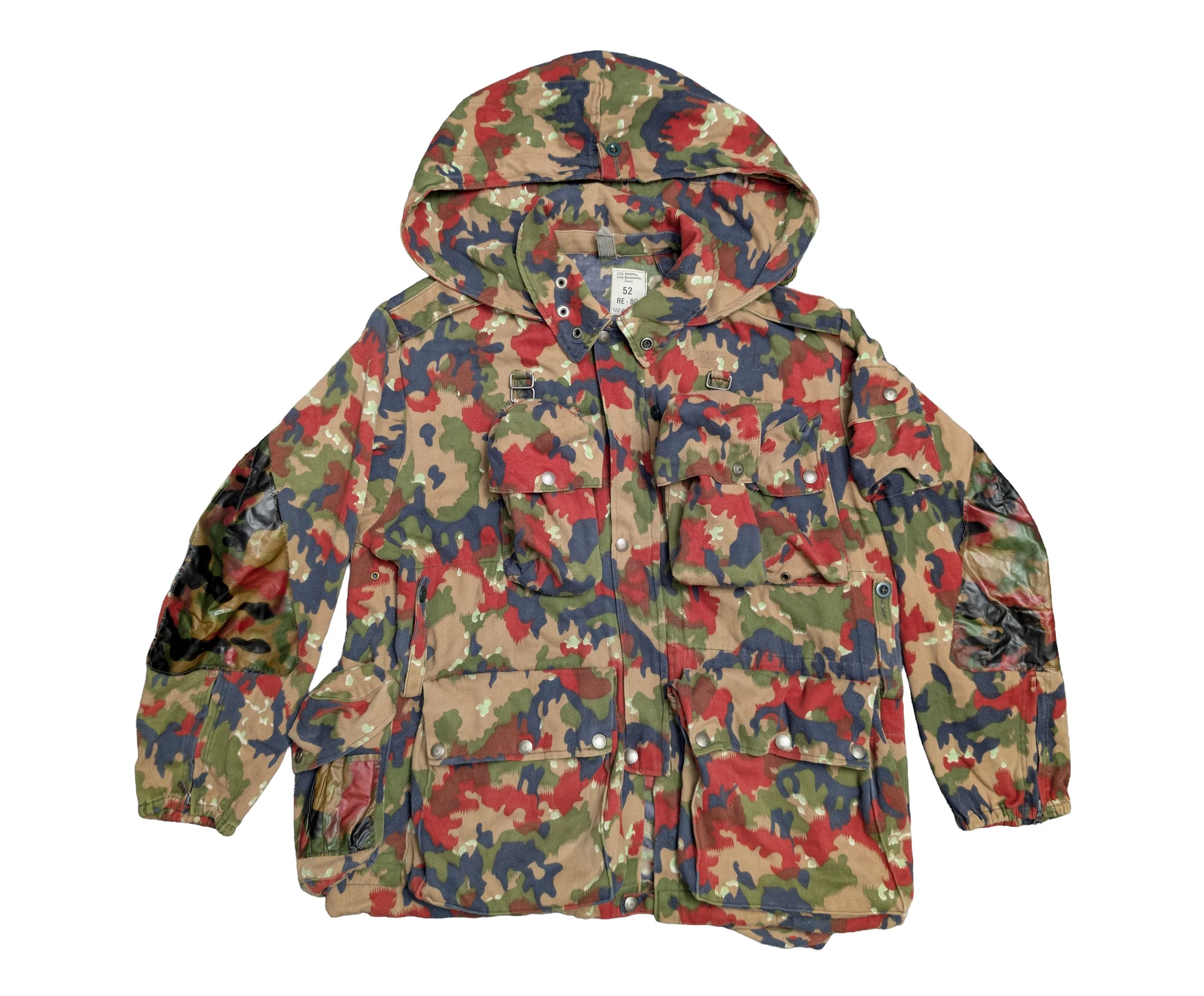
The M70:
Ten Years of Field Fixes
By 1970, the Swiss Army had gathered enough feedback to overhaul the system. They didn't scrap the "wearable backpack" concept; they simply engineered the pain points out of it. The resulting Kampfanzug M70 is a masterclass in iterative military design.
Solving the Moisture Problem
To combat the issue of soaked elbows and knees, the Swiss replaced the cloth reinforcements with heavy-duty, waterproof vinyl (PVC) patches. This simple material change allowed troops to fire from a prone or kneeling position in wet snow or mud without the uniform absorbing water. Today, these "plastic" patches are the most immediate visual indicator that you are looking at an M70 rather than an M61.
Rethinking Load Distribution
The Swiss engineers redesigned the internal suspension of the M70, utilizing joined suspenders in the back to stabilize the load. More importantly, they added an extra set of metal clips to the chest area of the jacket. These allowed the combat rucksack to anchor at four points instead of two, pulling the weight off the tops of the shoulders and distributing it evenly across the soldier's torso.
Ergonomic Streamlining
The integrated bayonet frog was entirely deleted. The Swiss accepted that some modularity was necessary, moving the bayonet to a separate belt (the Ceinturon) worn over the jacket. They also slightly refined the fabric weave, making the M70 marginally lighter and more pliable than the incredibly stiff M61 canvas, while slightly lengthening the sleeves to better accommodate the average soldier's reach.
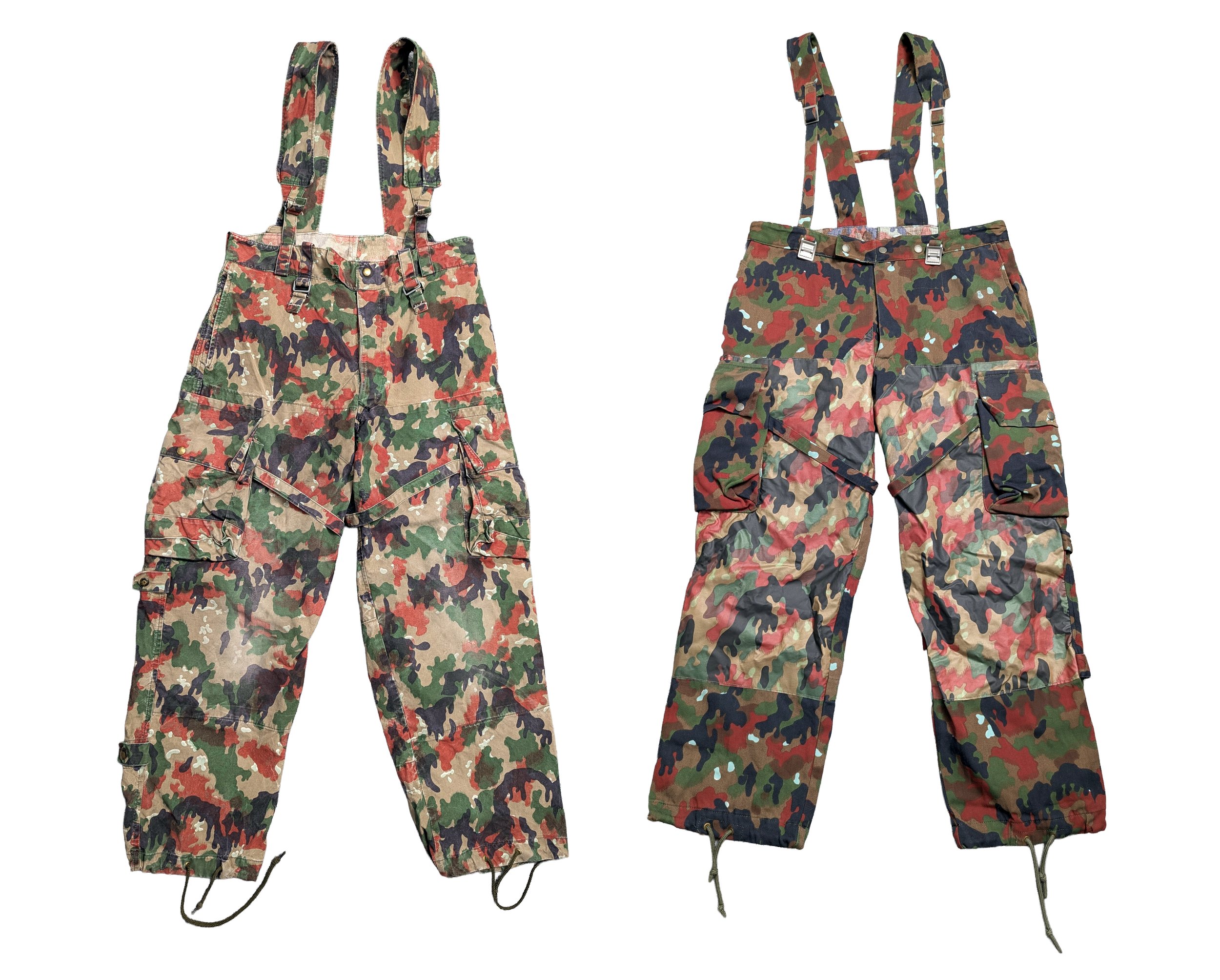
Left: Issued M61 Trousers - Note the wide suspender straps and no “H’’ design
Right: Unissued M70 Trousers in their final form - Utilizing the M83 pattern
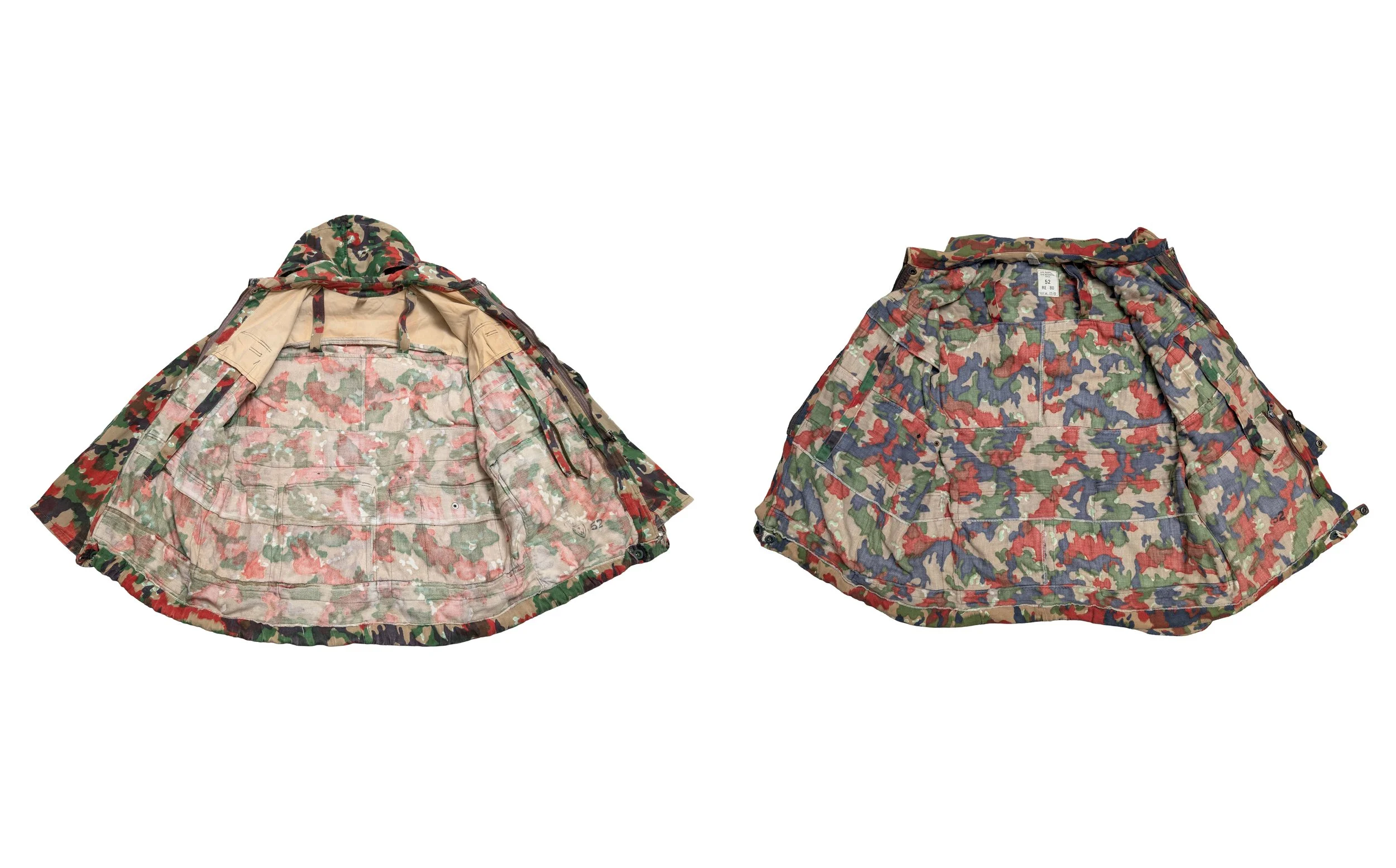
Left: M61 jacket with internal rubberized shoulder section
Right: M70 jacket removes this entirely - shedding weight & helping with breathability
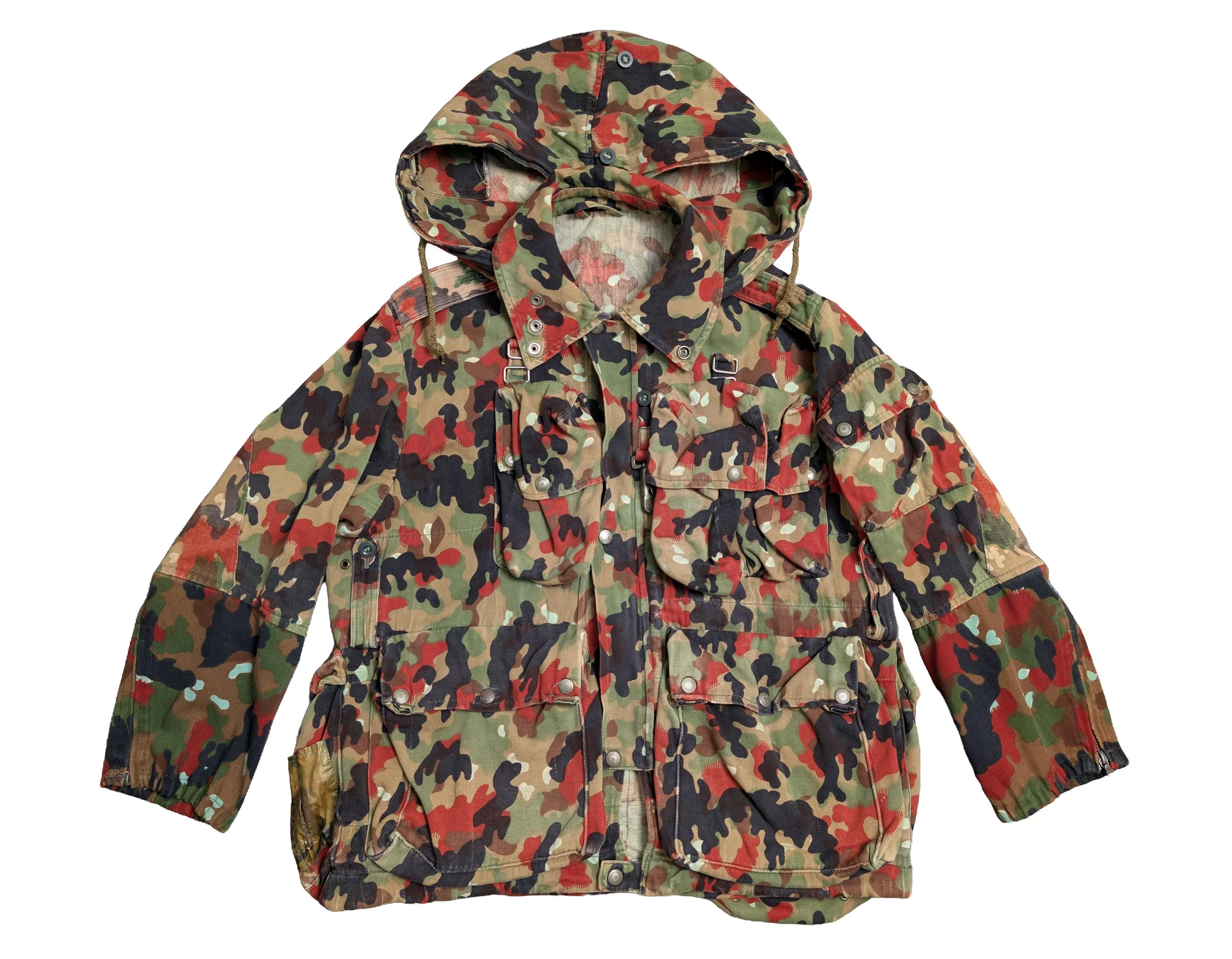
You can also find modified/improved jackets. This one has lower sleeves replaced, noticeable because of theM83 pattern. They’re often longer, since the M61 sleeves were notoriously short.